
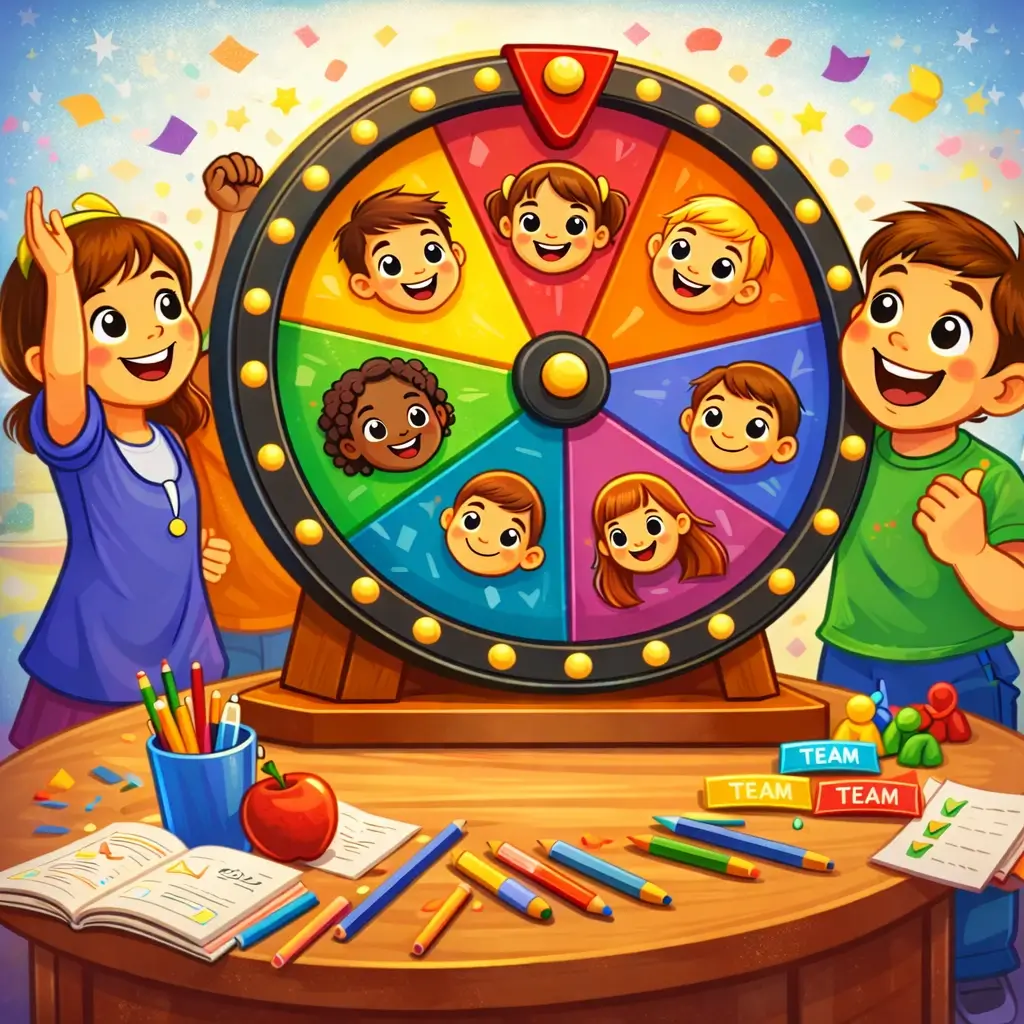
A classroom spinner turns ordinary review questions and transitions into activities students can see, understand, and enjoy. These seven games need very little preparation and can be adapted to almost any subject.
1. Question wheel
Add review questions or topic names to the wheel. A student spins, answers the selected question, and then chooses the next person to participate.
2. Vocabulary challenge
Fill the wheel with vocabulary words. After each spin, students can define the word, use it in a sentence, draw it, or give a related example.
3. Quick brain breaks
Use short activities such as stretching, breathing, drawing, or movement. A one-minute break can reset attention without disrupting the lesson.
4. Random team roles
Add roles such as reader, recorder, presenter, and timekeeper. Spin once for each group so responsibilities feel transparent and fair.
5. Story starter
Combine characters, places, objects, or problems on the wheel. Students use the result as the beginning of a short speaking or writing exercise.
6. Exit ticket
Use prompts such as “one thing I learned,” “one question I still have,” and “one useful example.” Spin at the end of class for a quick reflection.
7. Classroom reward
Let the class choose from approved rewards such as extra reading time, a short game, or choosing tomorrow's warm-up.
Keep every wheel short, visible, and focused on one learning goal.